Men's Color Theory: How to Choose the Best Colors for Your Skin Tone 2026
Stop wearing colors that make you look washed out. Learn the science of seasonal color analysis to optimize your aura and maximize your face card.

Understanding the Basics of Men's Color Theory
Most guys approach their wardrobe by picking colors they like or colors they see on a mood board. This is a fundamental mistake. Wearing a color that clashes with your biological undertones is a silent failo that can make you look tired, sallow, or sickly regardless of how expensive the clothes are. Men's color theory is not about fashion trends. It is about leveraging the physics of light and pigment to create a halo effect around your face. When you wear a color that aligns with your skin tone, your eyes look brighter, your skin looks clearer, and your overall aura is amplified. When you wear the wrong color, you are effectively fighting against your own genetics, creating a visual dissonance that people notice subconsciously even if they cannot put their finger on why you look off.
To master men's color theory, you first have to stop thinking about skin color in terms of light or dark. A pale guy can have warm undertones, and a dark skinned guy can have cool undertones. The surface color is just the paint. The undertone is the primer. This is where most NPC style guides fail. They tell you to wear blue if you are fair or beige if you are dark. That is a surface level approach. True optimization requires you to identify whether your skin has a cool, warm, or neutral undertone. Cool undertones typically have hints of pink, red, or bluish hues. Warm undertones lean toward yellow, peachy, or golden tones. Neutral undertones sit right in the middle, meaning you can pivot between both palettes, though you still have a dominant lean that will maximize your face card.
The easiest way to determine your undertone is to look at the veins in your wrist under natural light. If your veins appear blue or purple, you are likely cool. If they look green or olive, you are likely warm. If you cannot tell or they look like a mix of both, you are neutral. Another reliable test is the white paper test. Hold a piece of stark white paper up to your face in a mirror. If your skin looks pink or blue against the white, you are cool. If it looks yellow or golden, you are warm. Once you have this baseline, you can stop guessing and start building a wardrobe that actually works for you. The goal is to find colors that harmonize with your natural pigmentation, which creates a seamless transition between your clothing and your skin, making you look more dialed in and put together.
The Four Seasonal Color Palettes for Men
Once you know your undertone, you can slot yourself into a seasonal category. This is the gold standard for men's color theory because it accounts for both undertone and contrast. The four seasons are Winter, Summer, Autumn, and Spring. Winter is for guys with cool undertones and high contrast. This usually means very pale skin with dark hair or very dark skin with a cool glow. Winters look lethal in high contrast combinations. Think stark white, deep black, royal blue, and emerald green. If you are a Winter, wearing muted earth tones like olive or beige will make you look washed out and drain the life from your face. You need colors that are as bold as your natural contrast to avoid looking like you are disappearing into your clothes.
Summer is for guys with cool undertones but low contrast. This is often the pale guy with blonde or light brown hair and blue or grey eyes. The mistake Summer types make is trying to wear the high contrast colors of the Winter palette. A stark black t shirt on a Summer type often looks too heavy and overwhelms their features. Instead, you want muted, cool tones. Think slate grey, dusty blue, lavender, and mint. These colors complement the softness of your features without overpowering them. By sticking to a cool but muted palette, you enhance the natural clarity of your skin and avoid the sallow look that comes from wearing warm, muddy colors like orange or mustard yellow.
Autumn is the warm equivalent of Summer. These guys have warm undertones and low to medium contrast. Think of the guy with red hair, golden brown hair, or olive skin with warm highlights. Your power colors are the ones that mimic the changing leaves. Burnt orange, olive green, mustard yellow, and deep chocolate brown are your staples. If an Autumn type wears a cool, stark white shirt, they often look ghostly or sickly because the blue base of the white clashes with the golden base of their skin. Swapping that white for a cream or off white immediately fixes the problem. This is a simple shift that moves you from looking like an NPC to looking like someone who understands how to optimize their visual presence.
Spring is for guys with warm undertones and high clarity. This is often seen in guys with bright eyes and golden hair or skin that tans very easily with a golden hue. Spring colors are bright, warm, and saturated. Think bright coral, turquoise, golden yellow, and warm greens. The trap for Spring types is wearing colors that are too dark or too muted. A deep charcoal suit can often swallow a Spring type, making them look dull. Instead, opting for a mid grey or a warm navy keeps the energy high and the face card bright. When you align your clothing with these high energy warm tones, you maximize your aura and project a sense of health and vitality that cool tones simply cannot provide for your specific biology.
How to Implement Men's Color Theory into Your Wardrobe
Now that you know your season, the next step is the actual application. You do not need to throw away every piece of clothing you own, but you should start auditing your wardrobe based on these principles. The first priority is the clothes closest to your face. This means t shirts, button downs, jackets, and hoodies. If you have a shirt in a color that clashes with your skin tone, it is a failo that you cannot ignore. Even if the fit is perfect, the wrong color will sabotage your overall look. Start by replacing your most worn items with colors from your specific palette. If you are a Winter, replace your beige hoodies with black or navy ones. If you are an Autumn, swap your stark white tees for cream or oatmeal versions.
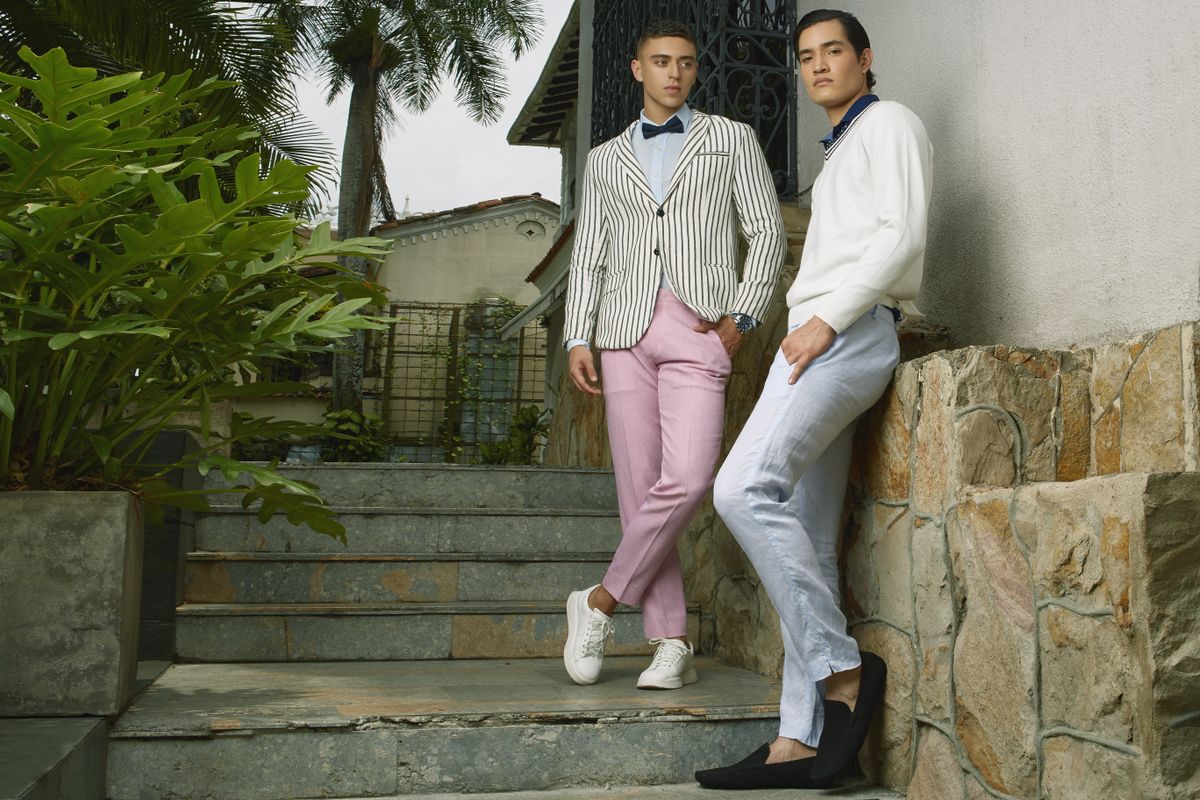
One of the most effective ways to use men's color theory is through the concept of color anchoring. This involves using a neutral base and adding a pop of color that specifically optimizes your skin tone. For example, if you are a Summer type, a charcoal grey pair of trousers and a slate grey t shirt provide a neutral base. Adding a dusty blue overshirt creates a cohesive, low contrast look that enhances your features. For an Autumn type, khaki chinos and a cream shirt create the base, and an olive green jacket provides the anchor. This approach allows you to experiment with colors without feeling like you are wearing a costume. It is about strategic integration rather than a total overhaul.
You should also consider the impact of lighting on your color choices. Natural sunlight is the most honest light, but most of your life happens under artificial LEDs or warm indoor lighting. Cool toned guys often look better under the blue light of a modern office, while warm toned guys can look more vibrant in a candle lit restaurant or under warm yellow lamps. However, the goal is to look good in all environments. This is why choosing colors that sit in the center of your seasonal palette is the safest bet. Avoid the extreme edges of your palette for your most expensive pieces. Invest in high quality basics in your core colors and use cheaper, trendier pieces to experiment with the more daring shades of your season.
Do not ignore the role of accessories in your color stack. The metal you wear is just as important as the fabric you wear. Cool toned guys should almost exclusively wear silver, white gold, or platinum. Gold can look jarring or cheap on a cool skin tone because the contrast is too high. Warm toned guys should lean into gold, rose gold, or bronze. Silver can look cold and lifeless on a warm skin tone. This is a detail that most guys miss, but it is a key part of being fully dialed in. When your jewelry matches your skin undertone and your clothing matches your seasonal palette, you create a visual harmony that signals high status and attention to detail.
Avoiding Common Color Mistakes and the Cope of Trends
The biggest mistake guys make is following trends instead of their biology. Every year, a certain color becomes trendy. Maybe it is sage green one year and electric purple the next. If you buy into these trends without considering men's color theory, you are risking your aura for the sake of a trend. Just because a specific color is popular on social media does not mean it works for your face card. If you see a guy wearing a color that looks incredible on him but looks terrible on you, it is because your seasonal palettes are different. Trying to emulate someone else's color palette is pure cope. It is an attempt to borrow someone else's aura instead of building your own.
Another common error is the misconception that black is a universal color. Many guys believe that black is the safest choice because it is neutral. In reality, black is a high contrast, cool toned color. For a Winter, black is a power color. For a Summer or Autumn, black can be too harsh and can actually make the skin look pale or sallow. If you find that black makes you look tired, try swapping it for navy, charcoal, or deep chocolate brown. These colors provide the same slimming and professional effect as black but are more forgiving to a wider range of skin tones. The goal is not to avoid black, but to know when black is working for you and when it is working against you.
Many guys also struggle with the transition between different color palettes. You might find that you are a mix between two seasons, which is common for neutral undertones. The key here is to identify which season you lean toward more. If you are between Summer and Winter, you are still cool, but you need to decide if you can handle the high contrast of Winter or if you look better in the muted tones of Summer. The best way to test this is to take photos of yourself in both palettes under the same lighting. Compare them side by side. You will notice that in one palette, your skin looks more vibrant and your jawline looks sharper, while in the other, you look slightly blurred or washed out. This is the evidence you need to make a decision.
Finally, stop relying on the advice of people who are not optimizing. Most retail employees are trained to sell inventory, not to optimize your face card. They will tell you that a color looks good because it is a best seller, not because it harmonizes with your undertones. Your goal is to be the smartest guy in the room, and that means doing your own research and trusting the science of color theory over the opinion of a salesperson. Once you have your palette dialed in, you no longer have to guess. You can shop with confidence, knowing that every piece you buy is adding to your overall SMV rather than subtracting from it.
The ultimate goal of stylemaxxing is to remove all friction between how you want to be perceived and how you are actually seen. When your colors are optimized, you remove a layer of visual noise that was previously distracting from your best features. You are not changing who you are; you are simply presenting the most optimized version of yourself to the world. This is the difference between a guy who is just wearing clothes and a guy who is using style as a tool for ascension. Stop guessing and start calculating. Your wardrobe should be a precision instrument designed to maximize your aura and solidify your presence in any room you enter.