Arm Exercises for the Perfect V-Taper: Build Aesthetic Proportions (2026)
Master the best arm exercises specifically designed to enhance your V-taper silhouette. Learn bicep and tricep training techniques that create the masculine proportions looksmaxxers crave.

Your V-Taper Lives and Dies by Your Arms
The V-taper is the most universally admired silhouette in the gym. Broad shoulders, narrow waist, arms that fill out your shirt just right. It's the classic sign of someone who has put in real work. But here's where most guys go wrong: they treat the V-taper like a shoulders-and-back problem. They hammer lateral raises. They pile plates on the pulldown. They do endless face pulls. And they completely neglect the arms that are supposed to cap off the whole look.
Your arms are the finishing move on the V-taper. Without them, you have a pyramid with no apex. The shoulders look wide, the back looks thick, but there is no visual completion. The arm-to-waist ratio is what makes the taper read as extreme. You can have a 46-inch shoulder measurement and a 30-inch waist, but if your arms are pipestems, the whole effect falls apart. The V-taper is not just about width. It is about proportion. And proportion requires arms that match the frame.
Most guys understand this on some level, but they make two critical mistakes. First, they undertrain their arms relative to their push and pull movements. If you are doing a bro split where arms are an afterthought on back day or chest day, you are not building the arms the V-taper demands. Second, they train arms for size but not for shape. Big arms that are all bicep and no definition look like you inflated a balloon. Arms that have the right proportions, the right peak, the right sweep, look like art. This article is going to give you the protocol to build arms that complete your V-taper and make people notice.
The Anatomy of Arms That Moge: What You Are Actually Building
Your arms have three main muscle groups that matter for aesthetics. The biceps brachii is the muscle everyone thinks about. It has two heads, the long head and the short head, and it is responsible for that peak you see when someone flexes. The long head sits on the outside of your arm and contributes to the peak when your arm is in certain positions. The short head sits on the inside and contributes to overall arm width when viewed from the front. Getting both heads developed is what gives you arms that look full from every angle.
The triceps brachii is actually the larger muscle group in your arm. It makes up about two-thirds of your arm circumference. Three heads: long, lateral, and medial. The long head runs down the back of your arm. The lateral head is the horseshoe shape you see when you flex from the side. The medial head sits underneath and is mostly visible when you are extremely lean. If you are only training biceps and ignoring triceps, you are leaving roughly sixty percent of your arm size on the table. Every serious looksmaxxer who wants the V-taper has to prioritize tricep development. It is not optional. It is the foundation.
The brachialis sits underneath your bicep, pushing it up and making it look higher and more defined. A well-developed brachialis creates a separation line between your bicep and forearm that adds detail even when you are not flexing. It also contributes to forearm width at the elbow, which creates a more complete arm silhouette. Most people completely neglect this muscle, which is a mistake because it responds very well to targeted work and adds measurable aesthetic value to your arms with relatively low training volume.
The Compound Foundation: Building Mass That Scales Your Frame
Before you do a single isolation curl, you need to establish a compound base. Pull-ups, chin-ups, and various row variations build your biceps through functional ranges that isolation work cannot replicate. The key here is to stop thinking of these as back exercises and start thinking of them as arm exercises that happen to involve your back. When you perform a wide grip pull-up, your lats do most of the work, but your biceps are under significant tension throughout the entire range of motion. That tension adds up over time and builds mass that isolation work alone cannot create.
Close grip pull-ups and chin-ups shift the emphasis more directly onto your biceps. A supinated grip, which is what you use in a chin-up, maximizes bicep activation. Studies using EMG have consistently shown that chin-ups produce higher bicep activity than pull-ups. If your goal is to build arm mass that contributes to your V-taper, chin-ups should be a non-negotiable movement in your protocol. Do them with a full range of motion. No half reps. No kipping. If you cannot do a full set of clean pull-ups or chin-ups, work on building up to them with banded variations or negative reps. The payoff in arm development is worth the investment.
Barbell rows and pendlay rows also contribute to arm mass, particularly in the long head of the bicep and the brachialis. The pulling angle places your biceps in a stretched position at the bottom of each rep, which provides a different stimulus than vertical pulling patterns. Including some horizontal pulling in your routine ensures you are hitting the biceps from multiple angles and building complete arm development rather than lopsided growth. Think of your compound movements as the foundation of your arm mass. Everything else is detail work on top of that foundation.
The Isolation Protocol: Shaping the Arms the V-Taper Demands
Once you have established your compound base, isolation work becomes the shaping tool. This is where you turn average arms into arms that complete the V-taper. The protocol below is designed to hit every head of every muscle group that contributes to arm aesthetics. Follow this three-day rotation for maximum results.
Day one focuses on biceps. Start with hammer curls, which hit the brachialis and the long head of the bicep simultaneously. Use a neutral grip and control the eccentric portion of each rep. Three sets of eight to twelve reps with a weight that challenges you by rep eight. Move directly into preacher curls for short head isolation. The preacher curl position removes momentum and forces your biceps to do all the work through a full range of motion. Keep your elbows locked in position and squeeze at the top of each rep. Three sets of ten to twelve reps. Finish with concentration curls for peak development. The single arm isolation here lets you focus entirely on the bicep peak and creates that rounded look at the top of your arm that defines giga arms. Three sets of twelve to fifteen reps per arm.
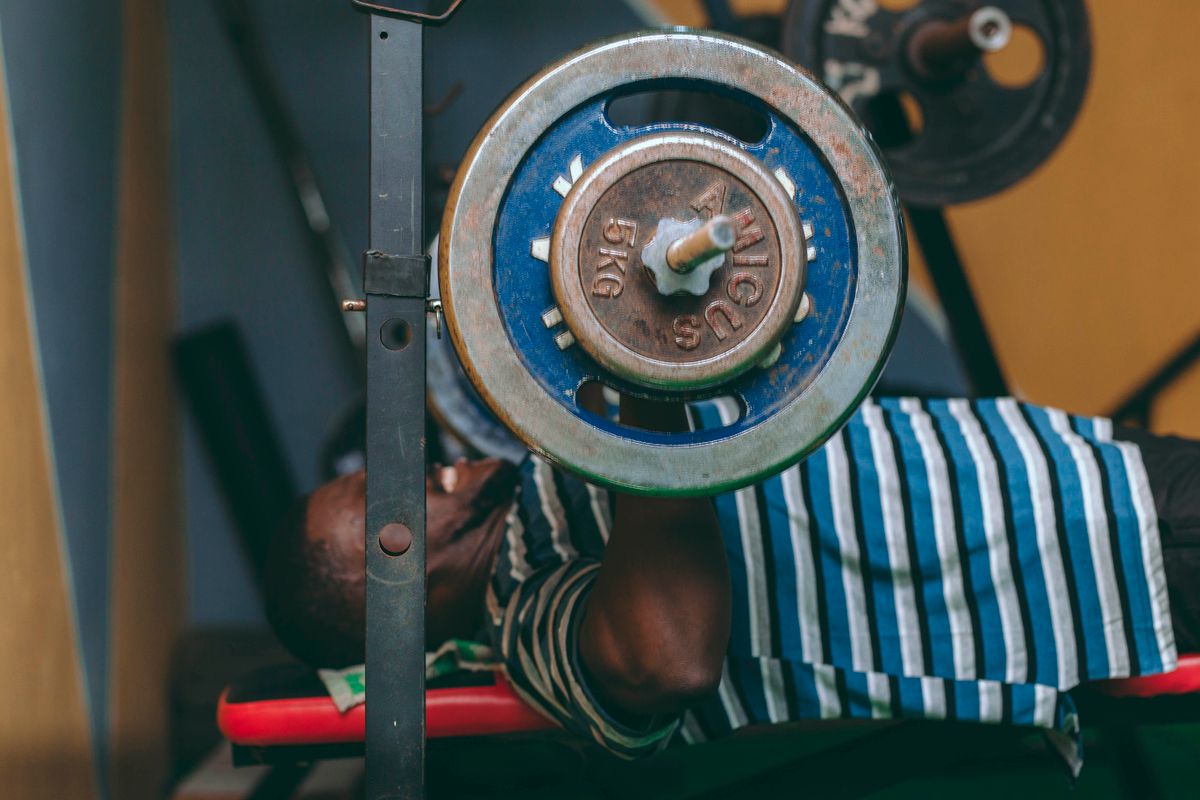
Day two targets triceps. This is where most guys fall short and where you can separate yourself from the pack. Begin with close grip bench press or floor press to establish a heavy compound foundation for your triceps. Three sets of six to eight reps with a weight that would be challenging for three extra reps. Move into overhead tricep extensions, which hit the long head of the tricep more effectively than any other movement. The long head is what gives your arm that full, complete look when viewed from the side. Three sets of ten to twelve reps. Finish with rope pushdowns for the lateral head, the horseshoe that creates that three-dimensional tricep definition. Three sets of twelve to fifteen reps with a controlled eccentric and a hard squeeze at the bottom position.
Day three combines both with a high volume pump session. Incline dumbbell curls for a stretched position that recruits both bicep heads and the brachialis. Do four sets of twelve. Follow with skull crushers for tricep mass, emphasizing the long head with an EZ bar or dumbbells on an incline bench. Four sets of ten. Finish with cable curls and pushdowns for a burning pump that drives blood into the muscle and creates that full, engorged look that signals real arm development.
The Science of Arm Growth: Progressive Overload and Frequency
Arms are a muscle group that responds well to frequency. Unlike legs or back, which require longer recovery periods due to their sheer size and metabolic demand, your biceps and triceps recover relatively quickly. Most protocols that build the best arms incorporate some form of increased frequency. Training arms twice per week, spaced three to four days apart, typically produces better results than once per week for the majority of trainees. Your arms are small enough to recover from two solid sessions per week, and the additional volume accelerates growth.
Progressive overload is the non-negotiable principle that separates arm growers from arm stalers. You need to be adding weight, reps, or sets over time. If you are doing the same weight for the same reps in the same exercises week after week, your arms are not growing. They are maintaining. This means tracking your lifts, even if it is just a mental note. Know what you lifted last week. Know what you lifted today. The weight should go up or the reps should go up. Consistently. This is how you build the arms that make your V-taper sing.
Time under tension is another variable that moves the needle for arm development. Arms respond well to controlled negatives and extended eccentric phases. When you are doing a bicep curl, take three seconds on the way down. When you are doing a tricep pushdown, resist the weight on the way up. This time under tension signals greater muscle fiber recruitment and creates the stimulus for growth. It also reduces the momentum that often cheats people out of the full benefit of their isolation work.
Body Fat and the V-Taper: Why Your Arms Need to Be Visible
Here is the hard truth that many gym bros do not want to hear. You can build the most aesthetic arms in the world, but if your body fat is too high, nobody will see them. Arms are a body fat dependent muscle group. They start showing definition around fifteen percent body fat for most men. At twelve percent, they look solid. At ten percent, they look carved. The definition in your biceps peak, the separation between your biceps and triceps, the visibility of your brachialis, all of this depends on you being lean enough for it to show.
The V-taper itself is partly about reducing your waist. As you cut body fat, your waist shrinks and your arms stay roughly the same size. This improves the arm-to-waist ratio that defines the V-taper. A guy with fifteen-inch arms and a thirty-two inch waist looks smaller than a guy with fourteen-inch arms and a twenty-eight inch waist, even if the first guy has more total arm mass. Leanness is the multiplier on everything else you do in the gym. Every protocol in this article is multiplied by your body fat percentage. Get lean first. Build second. Or do both simultaneously with a slight caloric deficit and sufficient protein intake. Eight grams of protein per kilogram of body weight is the target while cutting. Do not negotiate this down.
Building the Arms That Complete Your Frame
The V-taper is not built in a single session. It is built over months and years of consistent training, progressive overload, and intelligent programming. Your arms are the cap on that pyramid. Without them, the V-taper is incomplete. With them, you have a silhouette that looks intentional, like someone who trains with purpose and understanding of proportions.
Start with the compound foundation. Add the isolation protocol. Prioritize triceps because they are sixty percent of your arm size. Train them twice per week. Track your progress. Get your body fat down. The arms that complete the V-taper are not reserved for genetic lottery winners. They are built by guys who follow a solid protocol and stay consistent. The information is here. The protocol is here. Now it is on you to execute.