Creatine: Benefits Beyond Muscle
Creatine is the most researched supplement in history and most guys only know half the story. It sharpens your brain, hydrates your skin, and costs pennies a day. Here is the complete guide.
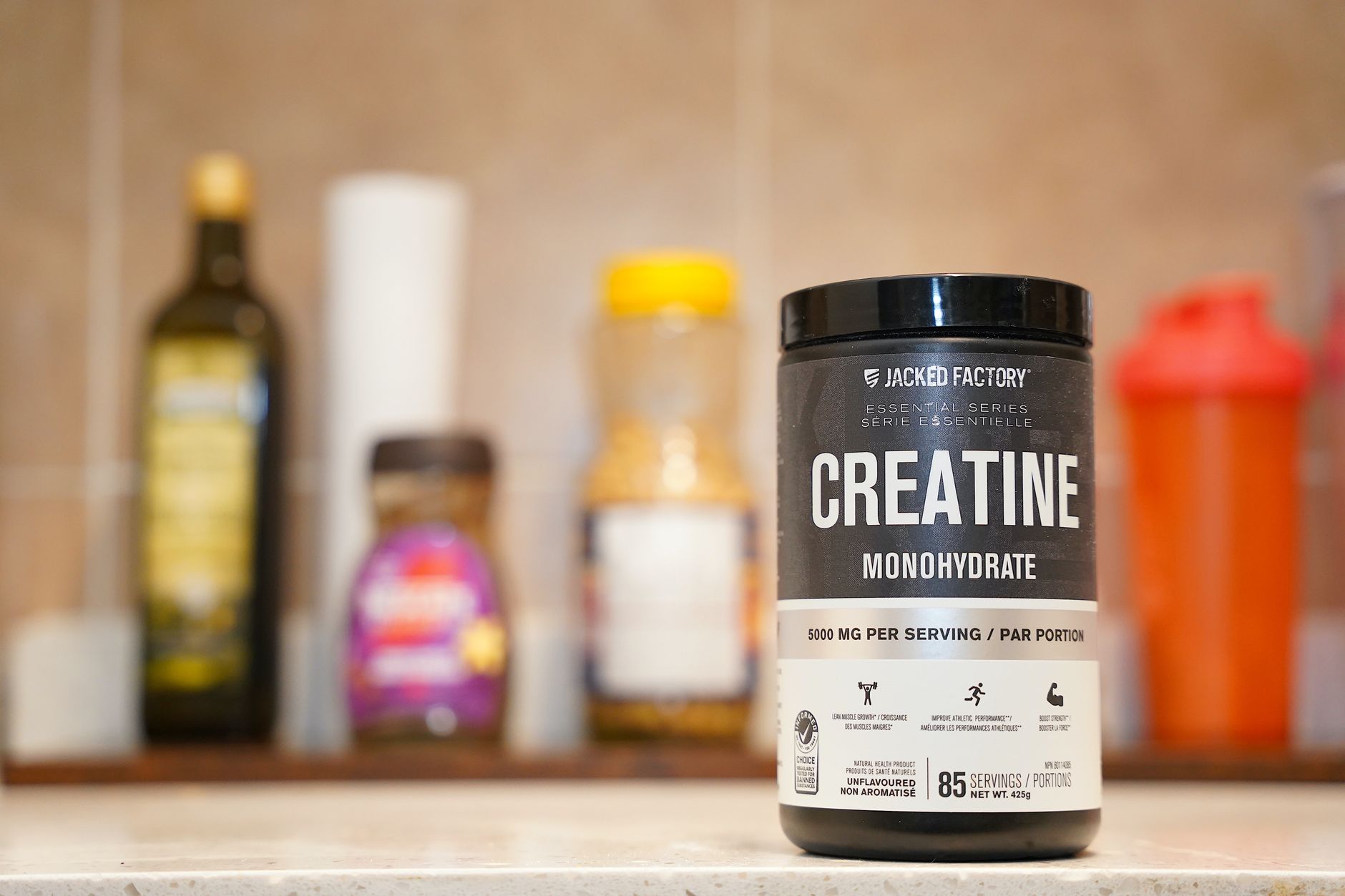
Every gym bro knows creatine makes you stronger and helps you fill out a t-shirt. What most guys do not know is that creatine is also one of the best supplements for brain function, skin hydration, bone density, and recovery. It costs roughly twelve cents per day, has no meaningful side effects in healthy adults, and has more clinical research behind it than virtually any other supplement on the market. If you are not taking creatine, you are leaving gains on the table in the gym and outside it.
This guide covers what creatine actually does in your body, how to take it properly, the benefits nobody talks about, and the myths that need to die.
What Creatine Actually Does in Your Body
Creatine is not a steroid. It is not a stimulant. It is not a hormone. It is a naturally occurring compound made from three amino acids: arginine, glycine, and methionine. Your body produces about one gram per day on its own, and you get another gram or so from food, primarily red meat and fish. The problem is that one to two grams per day is not enough to saturate your muscle creatine stores, which is where the real benefits kick in.
Here is the mechanism in plain language. Your cells run on a molecule called ATP, adenosine triphosphate. When ATP releases energy, it becomes ADP. Creatine phosphate, stored in your muscles, donates a phosphate group to ADP to regenerate ATP. This means you can produce more energy, faster, for short bursts of high intensity effort. That is why creatine helps with heavy lifts, sprints, and explosive movements. It does not make you stronger directly. It lets you produce more maximal effort output for longer before fatigue sets in.
When you supplement with creatine monohydrate at 3 to 5 grams per day, you saturate your muscle phosphocreatine stores to roughly 90 percent capacity. This translates to roughly 5 to 15 percent more power output on maximal efforts, 1 to 3 more reps per set at a given weight, and faster recovery between sets. These are not theoretical benefits. They have been replicated across hundreds of studies over three decades.
But here is the part most people miss: creatine is stored in every cell that uses ATP, not just muscle. Your brain, your skin, your bones, your heart. When you saturate muscle stores, you also increase creatine availability in these other tissues. That is where the non-gym benefits come from.
The Benefits Nobody Talks About
Brain function is the most underrated creatine benefit. Your brain uses roughly 20 percent of your body's total ATP despite being only 2 percent of your body weight. When you take creatine, brain creatine levels increase, and the research on cognitive effects is substantial. Studies have shown improved performance on tasks requiring short-term memory, processing speed, and fluid intelligence. The effect is most pronounced under conditions of stress, sleep deprivation, and mental fatigue, which is basically the default state of most working adults.
For anyone doing cognitively demanding work, creatine is the single most evidence-based cognitive enhancer available without a prescription. It is not a stimulant. It will not give you jitters or a crash. It simply gives your brain more energy currency to work with. Think of it as upgrading your brain's battery from 80 percent capacity to 100 percent.
Skin hydration is the benefit that connects creatine directly to your face card. Creatine increases intracellular water content, but here is the critical distinction: it increases water inside your cells, not under your skin. This is not bloating. This is cell volumization, and it is a good thing. Hydrated cells function better, repair faster, and look healthier. When your skin cells are well-hydrated, your skin appears plumper, smoother, and more elastic. The effect is subtle but measurable, and it compounds over time with consistent supplementation.
Bone density is another underappreciated benefit. Emerging research shows that creatine supplementation, combined with resistance training, improves bone mineral density more than resistance training alone. The mechanism is indirect but logical. Creatine lets you train harder. Harder training produces more mechanical loading on bones. More loading triggers more bone remodeling. Over months and years, this adds up to stronger bones and a lower risk of osteopenia later in life.
Recovery and injury prevention round out the list. Creatine reduces markers of muscle damage after intense training, decreases inflammation, and accelerates glycogen resynthesis when carbohydrates are consumed alongside it. For anyone training hard multiple days per week, creatine is not optional. It is the single cheapest, most effective recovery aid in your stack.
How to Take Creatine: The Complete Protocol
The dose is 3 to 5 grams of creatine monohydrate per day. That is it. No loading phase required. No cycling required. No timing requirements that matter. Take it whenever you want, with whatever you want, every single day. Consistency is the only variable that matters.
The loading phase is the most common piece of unnecessary advice in supplementation history. A loading protocol of 20 grams per day for 5 to 7 days will saturate your muscle stores faster, reaching full saturation in about a week instead of three to four weeks. But loading also causes more gastrointestinal distress, more water retention anxiety, and absolutely zero difference in long-term outcomes. If you reach the same destination in three weeks instead of one, and the three-week route is more comfortable, take the three-week route. Save your stomach.
Take creatine with food if you can. Carbohydrates and protein increase insulin, which improves creatine uptake into muscle cells. This is not a dealbreaker. Creatine absorbed on an empty stomach still works. But pairing it with a meal or a protein shake is a small optimization that costs nothing.
Hydration matters. Creatine pulls water into your cells, which means you need to drink enough water to support the additional intracellular volume. If you are taking creatine and drinking two liters of water a day, you are probably not hydrated enough. Aim for three to four liters, more if you are training hard or living in a hot climate. Dehydration while on creatine increases the risk of cramping and reduces the performance benefits.
The form matters, and by form we mean monohydrate. Not creatine ethyl ester, not creatine hydrochloride, not buffered creatine, not micronized creatine with proprietary blends. Creatine monohydrate is the most studied, most proven, and most cost-effective form. Every alternative form is either less effective, less studied, or more expensive for no additional benefit. Buy creatine monohydrate from a brand that uses Creapure or another third-party tested source. It should cost roughly ten to fifteen dollars for a three-month supply. If you are paying more, you are paying for marketing, not quality.
Myths That Need to Die
Myth one: creatine causes hair loss. This is based on a single study from 2009 that showed increased DHT levels in rugby players taking creatine. The study was never replicated. Multiple subsequent studies have found no significant effect of creatine on DHT or hair loss. The original study had a small sample size and the DHT increase was within normal fluctuation ranges. Creatine does not cause hair loss. If you are genetically predisposed to male pattern baldness, creatine will not accelerate it. If you are not, creatine will not trigger it.
Myth two: creatine causes kidney damage. Creatine supplementation does increase creatinine levels in blood tests, which is a marker used to assess kidney function. But creatinine is not creatine, and elevated creatinine from creatine supplementation does not indicate kidney damage. It indicates that your muscles are holding more creatine and breaking it down into more creatinine. Kidney function, assessed by more accurate measures like cystatin C or iothalamate clearance, is unaffected by creatine supplementation in healthy adults. If you have pre-existing kidney disease, consult a doctor. If your kidneys are healthy, creatine is safe.
Myth three: creatine causes bloating and makes you look puffy. This conflates two different things. Creatine increases intracellular water, which is water inside your muscle cells. This makes muscles look fuller and more hydrated, which is a desired effect. Extracellular water retention, the kind that makes you look puffy, is not caused by creatine. If you look bloated after starting creatine, you are either eating too much sodium, drinking too little water, or experiencing initial weight gain from increased muscle glycogen storage. All of these resolve within the first two weeks.
Myth four: you need to cycle off creatine periodically. There is no physiological reason to cycle creatine. Your body does not develop a tolerance. Your natural creatine production downregulates while you supplement, but it returns to baseline within a few weeks of stopping. Cycling off only means you spend those weeks with suboptimal creatine levels for no benefit. Take it every day, year round.
Creatine is the single best value in supplementation. Five grams per day, every day, indefinitely. Monohydrate only. Three to four liters of water. Food timing is optional but helpful. Everything else is noise. Add it to your stack and stop overthinking it.