How to Become Socially Magnetic: The Blueprint for Charismatic Presence (2026)
Discover the psychological frameworks and behavioral patterns that make certain people naturally magnetic in social settings. Learn how to calibrate your energy, command attention, and leave lasting impressions.
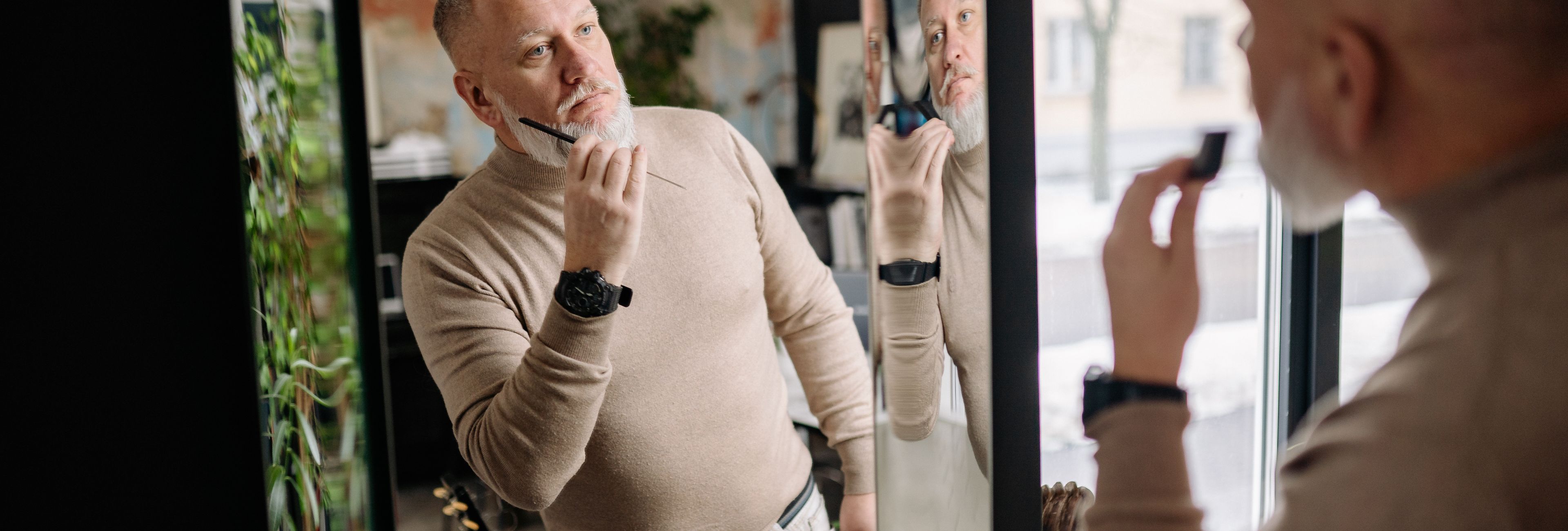
The Looksmaxxer Who Can't Hold a Room Is Running Incomplete Software
You've optimized your skin. Your frame is getting there. Your style is dialed in. And yet, when you walk into a room, something is still off. People don't gravitate toward you. Conversations feel like work. Your SMV is being held back by a failo that has nothing to do with your face card: you haven't maxxed your social magnetism.
This is the gap nobody talks about. You can look like a million bucks and still be the guy standing alone at the party because nobody taught you how to actually be magnetic. Charismatic presence is a skill. It's not genetic lottery. It's not something you're born with or without. It can be trained, protocoled, and optimized just like anything else in your looksmaxxing stack. This is the complete blueprint for building a presence that makes people want to be around you.
What Actually Makes Someone Socially Magnetic
Before we get into the how, you need to understand the what. Social magnetism is not about being the loudest person in the room or having a repertoire of jokes ready to deploy. It's not about being the most handsome guy or the richest. Those things help, but they're multipliers, not the foundation.
The foundation of charisma is the ability to make other people feel seen, valued, and engaged in your presence. That's it. Everything else, the body language, the vocal modulation, the storytelling ability, the confident posture, all of it serves that core function. You're signaling to people's nervous systems that being around you is safe, interesting, and rewarding.
Dermatological research on social signaling shows that humans make split second judgments about trustworthiness and warmth before conscious thought even kicks in. This is not rational. It's neurological. Your presence is communicating on a frequency that bypasses the prefrontal cortex entirely. Which means the conscious content of your words matters far less than most people think. How you say it, when you say it, the energy you carry into the exchange, that is what registers.
The guy who walks into a room radiating quiet confidence, makes eye contact with a genuine smile, and approaches people with authentic curiosity is going to be more socially magnetic than the guy who is objectively better looking but carries himself like he's waiting to be judged. The first guy has optimized his social software. The second is running on factory settings.
The Body Language Protocol: How You Show Up Before You Speak
Body language accounts for somewhere between 60 and 80 percent of first impression formation depending on the study. Your posture, your eye contact patterns, your facial tension, your spatial behavior, all of it is broadcasting a signal before you say a single word. Most guys have never consciously examined what their body language is communicating.
The charismatic posture is simple to describe and takes practice to embody. Shoulders back and down, chin slightly lifted, spine neutral, weight distributed evenly. You are occupying space without apology. You are not shrinking, not hunching, not fidgeting, not crossing your arms. You are not looking at the floor, the ceiling, or anywhere that isn't another person's face. When you make eye contact, you hold it with calm confidence, not a dead stare that makes people uncomfortable.
The smile is crucial. Not a polite social smile, not a performative grin, but a genuine expression that engages the eyes. The muscles around the eyes, the orbicularis oculi, fire involuntarily when the smile is real. People can tell the difference. A genuine smile is one of the highest ROI actions you can take in any social interaction. It signals safety, warmth, and openness. It costs nothing and it immediately raises the emotional temperature of the room.
Spatial behavior matters too. How close you stand, how you angle your body, whether you turn fully toward someone or half-face them, all of this communicates either engagement or disinterest. Charismatic people orient fully toward who they're talking to. They lean in slightly. They create the impression that this conversation, right now, with this person, is the most interesting thing happening in the world. That impression is the product of micro-behaviors sustained consistently over time.
Mirroring is a technique that skilled communicators use unconsciously and you can deploy consciously once you understand it. Subtly matching the other person's posture, tempo, and energy level creates rapport on a neurological level. If someone is speaking slowly and calmly, you don't want to be animated and rapid-fire. If someone is energetic and animated, matching that energy shows you're tuned in. The key word is subtly. Mirroring becomes creepy if it's obvious. It should feel like resonance, not mimicry.
Conversational Architecture: How to Talk So People Want to Stay
Once your body language is broadcasting the right signal, you need to actually hold conversations that people find rewarding. This is where most guys fall apart. They either talk too much about themselves, dominate the conversation with unsolicited opinions, or go silent and come across as disinterested. Neither extreme serves you.
The cornerstone of magnetic conversation is genuine curiosity about other people. This sounds simple but it's the thing most guys completely skip. They approach conversations as performances, as opportunities to demonstrate their own wit or intelligence or experience. They are auditioning rather than connecting. The moment you shift your orientation from performing to learning, the quality of your interactions transforms completely.
Ask questions that open up space rather than questions that can be answered with yes or no. Not "do you like your job?" but "what's the best part of your work?" Not "are you from here?" but "what brought you to this city?" Follow up on answers. If someone tells you they work in marketing, ask what specifically. Ask what they enjoy most about it. Ask what they're working on right now. People love to talk about themselves when given permission and space to do so. Your job is to grant that permission and hold that space.
Active listening is a phrase that's been mangled by self-help content until it sounds cheesy, but the underlying skill is real and essential. Active listening means you are fully present in the conversation, not thinking about what you're going to say next, not scanning the room for someone more interesting, not formulating a counterpoint. You are listening to understand, not to respond. When you do this, people feel it. They gravitate toward the person who makes them feel like what they're saying actually matters.
Stories are the currency of charismatic conversation. A well-timed short story that illustrates a point, reveals something about your character, or creates emotional resonance is more memorable than any string of facts or opinions. The protocol for good storytelling is simple: keep it tight, have a clear point or punchline, use sensory details to paint a picture, and practice delivering it with the right pacing. You don't need to be a natural comedian. You need to be someone who can take someone on a brief journey through a moment in your life that illuminates something true.
Vocal modulation is the element most guys ignore entirely. Monotone voice is the enemy of charisma. Your pitch, pace, and volume should vary naturally as you speak. Emphasize the important words. Pause before and after key moments. Speed up when you're excited, slow down when you're making a serious point. A voice with texture and rhythm holds attention in a way that a flat drone never will. You don't need to become a stage performer. You just need to stop talking like a text message.
Building Aura: The Presence That Precedes You
Your charisma in the moment is built on your aura, which is the energy you carry as a baseline that people pick up on before conscious interaction. Aura farming is a real practice. It is the deliberate cultivation of an energy that makes people curious about you, drawn to you, and wanting to know more.
Aura is built through several compounding factors. First, genuine confidence, not performative bravado, but the quiet certainty that comes from knowing your own value and not needing external validation. Second, passion and depth in at least one domain. The guy who has something he cares about, something he's building or learning or pursuing, has a magnetism that the vanilla, nothing-to-him guy simply cannot match. People are attracted to people who are alive with purpose.
Third, social proof. This is not about being popular for its own sake. It's about demonstrating that other people value your company. If you walk into a room alone and immediately look isolated and uncomfortable, people read that signal. If you walk in alone but carry yourself like you're exactly where you belong, that reads differently. The ultimate version of social proof is arriving with other people who are clearly glad to be with you. This is why building your friend circle and social network is part of the charisma stack. The more evidence you have that other humans enjoy your company, the more magnetic you become to new people.
Mystery and selectivity are underrated components of aura. The guy who is friendly with everyone but committed to no one reads as low value despite high social activity. The guy who is warm and engaged when he engages, but clearly has his own life, his own circle, his own direction, reads as high value. You don't need to be cold or dismissive. You just don't over-invest in people who haven't earned it. You guard your time and attention because they have value.
Emotional regulation is the backbone of strong aura. The socially magnetic person is never the one who gets loud when things don't go his way, who loses his composure when challenged, who makes scenes in public. That is weakness broadcasting. Emotional regulation is the ability to stay centered, warm, and clear even when circumstances are chaotic or people around you are reactive. This is not suppression. It's the difference between someone who is led by his emotions and someone who has a center of gravity that doesn't shift with every breeze.
The Pitfalls That Collapse Social Capital Instantly
Understanding what destroys charisma is just as important as understanding what builds it. Most guys have at least one or two behaviors that are silently tanking their social magnetism and they don't even know it.
One of the most common is neediness, which is the desperate need for approval and validation from others. Needy people are exhausting to be around because the interaction becomes about managing their emotional state rather than genuine connection. They need reassurance, they need to be liked, they need the other person to validate them. This manifests as agreeing with everything, over-complimenting, seeking approval before every statement, and radiating the anxiety that comes from not knowing your own worth.
Another charisma killer is one-upmanship. The guy who hears a story and immediately tells a better story, who hears an accomplishment and immediately mentions his own, who frames every conversation back toward himself. This is exhausting and it signals that you're not actually interested in the other person, you just want a platform. One-uppers are tolerated at best. Nobody wants to invite them back.
Complaining, gossiping, and negative framing are subtle destroyers that erode your social capital over time. The guy who is always shit-talking someone, always pointing out what's wrong, always bringing the energy down, is not someone people seek out. Charismatic people are associates of opportunity. People want to be around them because the interaction leaves them feeling good. Constant negativity makes you a chore.
Inconsistency is another silent killer. The guy who is warm one day and cold the next, who is engaging in some contexts and withdrawn in others, who radiates different energies depending on his mood, is hard to read and people default to distrust. Charismatic people are reliable in their presence. You know what you're getting. Their warmth is not conditional on their mood or circumstances.
Ascending Your Social Game Starts Today
You can read every article on charisma and absorb every framework, but none of it matters if you don't go out and practice. Social magnetism is a skill built through reps, through thousands of interactions that teach you how people respond to different approaches, through the failures that show you exactly which behaviors collapse your presence and which ones amplify it.
Start with one protocol. Pick the body language protocol this week. Walk into every social interaction with shoulders back, eye contact, and a genuine smile. Just that. Once that becomes automatic, layer in the conversational architecture. Practice asking better questions and listening to answers. Then work on the vocal modulation. Then build the aura through depth, passion, and emotional regulation.
SocialMaxx is not just about your face card. The guy with a great face and zero charisma is running a half-maxxed build. The guy with moderate genetics but maximum presence is mogging him in every room they share. You have the agency to build this. The work pays off. Start today.


