Best Chest Exercises for Alpha Upper Body Development (2026)
Discover the most effective chest exercises for building a powerful, looksmaxxing physique. Science-backed movements for maximum muscle mass and definition.
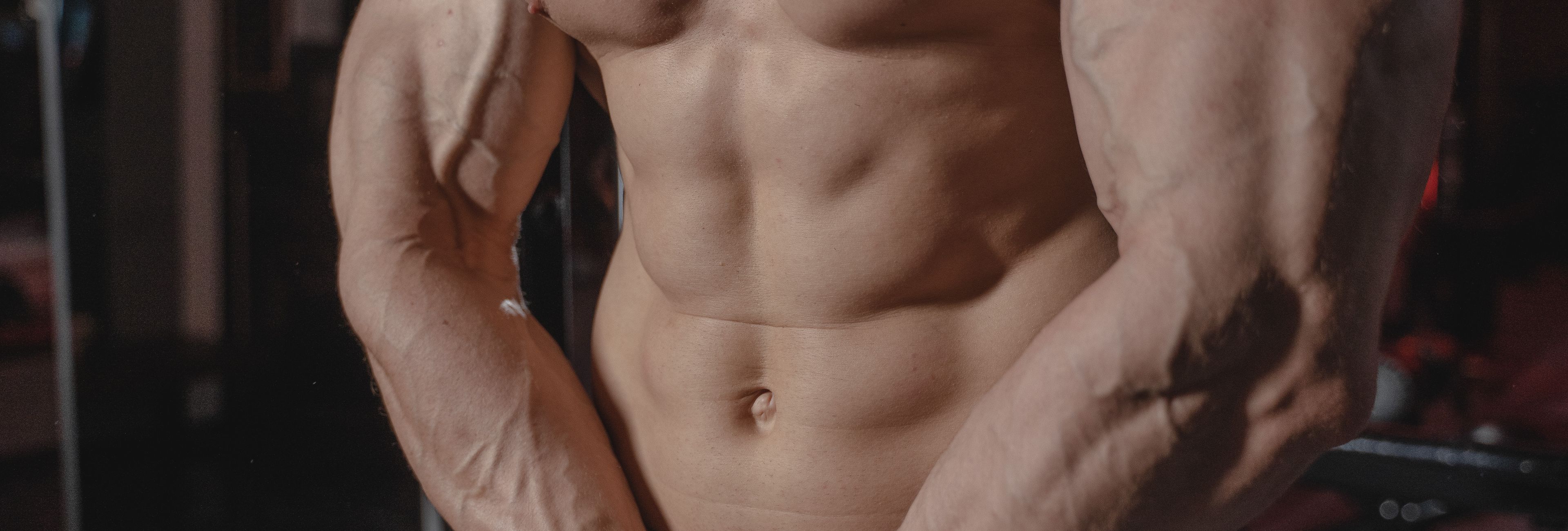
The Chest Is the Centerpiece of Your Upper Body
When someone shakes your hand and glances at you, their eyes don't start at your shoes and work their way up. They scan the chest and shoulders first. It's the widest horizontal line on your torso, the foundation of the V-taper that separates the guy who looks like he lifts from the guy who looks like he just owns a gym membership. A well-developed chest is a lethal face card for your upper body. It makes your shoulders pop, your waist look narrower, and your frame look broader even through a t-shirt. No other single muscle group delivers that much visual ROI with your shirt on.
Most guys destroy their chest workouts with the same 3 exercises they have been running since 2012. Bench press, bench press, cable fly. No thought, no progression, no adaptation. They wonder why their chest looks the same in March as it did in September. The chest has multiple heads, responds to different angles, and needs a mix of heavy pressing, controlled isolation, and stretch-mediated hypertrophy to actually develop. If you are leaving any of those three elements out, you are leaving gains on the table.
This is the definitive chest protocol for 2026. Every exercise earns its place. Every recommendation is grounded in how the muscle actually responds to training stimulus. Read this once, take notes, and build your next chest day around it.
The Compound Foundation: Pressing Movements That Build Mass
No amount of isolation work will build a chest that looks like it belongs on a statue. You need heavy, compound pressing to load the muscle with enough tension to trigger meaningful growth. The chest is a horizontal adductor of the humerus. That means its primary function is bringing your arms toward the midline of your body while flexing at the shoulder. The exercises that best replicate that movement under load are the ones that will build the most mass. Here is how to use them correctly.
The barbell bench press is the king of compound chest work and nothing has dethroned it yet. It allows you to load more weight than any dumbbell variation, creates maximum systemic tension, and engages the chest, triceps, and anterior deltoid in a coordinated movement pattern that builds functional strength alongside hypertrophy. Use a moderate grip width, roughly 1.5 to 2 hand widths from the smooth part of the bar. Going too wide increases shoulder strain without adding chest activation. Going too narrow turns it into a tricep dominant movement. Touch your chest on every rep, control the descent to a 2-second eccentric, and drive hard from the floor without bouncing.
For upper chest development, the incline barbell press is non-negotiable. The clavicular head of the pectoralis major responds best to pressing performed at 30 to 45 degrees of incline. Anything steeper than 45 degrees starts shifting load toward the anterior deltoid, which defeats the purpose. Use a slightly narrower grip on the incline variation to keep your elbows tracking in a safer position as the angle changes. Most guys neglect incline pressing because it feels heavier at lower weights. That is not a reason to skip it. That is a reason to build up to it properly over time. Your upper chest will thank you when it actually looks like it belongs to the same chest as your lower chest instead of a separate appendage.
The dumbbell bench press deserves its place in the stack for one reason: range of motion. Dumbbells allow a deeper stretch at the bottom of the movement compared to a barbell because your hands can travel further apart. That stretch under load is a direct driver of muscle hypertrophy, particularly for the chest which responds strongly to lengthened partial training. Start with your palms facing each other, lower the dumbbells until you feel a deep stretch in your chest fibers, and press back up while squeezing the dumbbells together at the top. This squeeze at lockout is where you close the ROM and fully contract the chest.
The dumbbell incline press follows the same logic as the incline barbell variation but with the added benefit of independent arm travel. If you have any left-right imbalances in your pressing strength, dumbbells will expose them quickly and allow you to address them without accommodating the stronger side. Set your bench to 30 degrees for upper chest emphasis and press with a neutral grip throughout the movement.
Isolation Work: The Shaping Protocol for Chest Definition
Compounds build the foundation, isolation work sculpts the details. Your chest may be thick from heavy pressing but look flat without proper isolation work that targets the muscle through its full contraction cycle. The chest has two primary heads, the sternal (lower and mid) and the clavicular (upper). Both need dedicated isolation work at different points of the movement to develop evenly.
Cable flyes are the gold standard for chest isolation and they are not even close. The constant tension provided by cables throughout the entire range of motion is something free weights cannot replicate. Dumbbells have a dead zone at the bottom of a fly where tension drops significantly. Cables maintain throughout, keeping the muscle fibers under load from the moment your arms start coming together until you squeeze at peak contraction. Set the cables to chest height, step forward into a staggered stance to create natural resistance, and bring your hands together in a wide arc with a slight elbow bend maintained throughout. Do not straighten your arms completely or it becomes a shoulder exercise. Do not flare your elbows out like a t-rex or you will irritate your shoulder joints.
The low-to-high cable fly variation specifically targets the upper chest because the cables pull from below your chest level, creating a line of resistance that pushes your arms upward as they come together. This mirrors the function of the clavicular head and provides a stimulus that incline pressing alone cannot match. Alternate between standard chest-height flyes and low-to-high variations to cover both heads in the same session.
Dumbbell flyes have their place but only when performed with intention. The key is controlling the eccentric phase and using a weight you can actually manage through the full stretch. Drop the weight if you have to. The chest responds to that deep stretched position and if you are heaving heavy dumbbells around without controlling the bottom of the movement, you are missing the point. Lie flat on the bench with a slight arch in your back, lower the dumbbells until you feel a deep stretch across your chest, and bring them back together with a slow, deliberate squeeze at the top.
Pec deck machine work is often dismissed as a machine bro staple but the pec deck has one specific advantage: it locks your scapulae in place and isolates the chest without allowing your back or shoulders to assist. If you are struggling to feel your chest during flyes, the pec deck removes the variables and forces chest contraction. Use it as a finisher after your compound and free weight isolation work. Set the seat height so the handles are at chest level, pin your scapulae against the pad, and squeeze through the movement with a controlled tempo.
The Overlooked Movements That Actually Build a Complete Chest
Beyond the standard pressing and flyes, there are movements that serious lifters use to address weak points, add variety to the stimulus, and develop a chest that looks complete from every angle. These are not luxury exercises. For many trainees, they are the missing piece that finally brings the whole chest together.
Parallel bar dips are one of the most underrated chest builders available. When performed with a forward lean, dips place enormous tension on the lower chest and create a stretch overload that is difficult to replicate with any other movement. Most guys skip dips because they are hard and the leverage gets worse as you get stronger. That difficulty is the point. Lean your torso forward approximately 30 degrees, lower yourself until you feel a deep stretch in your lower chest, and drive back up without shrugging your shoulders. If you cannot perform unweighted dips, use an assisted dip machine or banded assistance until you can. The chest development payoff from dips is significant enough to justify the interim adaptation period.
Push-ups are dismissed as a beginner movement but they have a place in every chest protocol if you use them correctly. The standard push-up with a full range of motion under control provides genuine chest stimulus and can be progressed infinitely through load addition and variation. The key is the depth. If your chest is not touching the floor at the bottom of every rep, you are running a half-range movement that will produce half-range results. Once you have mastered full range push-ups with good form, add load via a weight vest or a loaded plate on your back to continue progressing. In the context of a chest day, push-ups work well as a warm-up movement that pre-activates the chest and establishes the mind-muscle connection before you move to heavier compound work.
Machine chest press variations have improved significantly with modern engineering and they deserve a place in your protocol. The variable resistance offered by a good machine press allows you to handle more load at the end range where your chest is strongest, providing a different stimulus profile than free weights. Use machine pressing as a supplementary compound movement, particularly for drop sets or forced rep work where a spotter is not available to assist.
The Chest Protocol: Putting It Together for Maximum Development
Knowing which exercises to perform is only half the equation. How you arrange them, how many sets you perform, and how you progress over time determines whether you build a chest that turns heads or continue running the same plateaued routine you have had for years.
Start every chest session with a compound pressing movement. This is where your central nervous system is freshest and you can handle the heaviest loads with the best form. For most trainees, this means barbell bench press or incline barbell press. Perform 4 sets of 4 to 6 reps with a weight that leaves 2 reps in reserve on every working set. If you are hitting 6 reps easily, add weight next session.
Move to a secondary pressing movement that addresses a different angle. Dumbbell bench press, incline dumbbell press, or machine pressing all work here. This is where you continue building mass while the compound work is still fresh. Perform 3 to 4 sets of 6 to 8 reps.
Your isolation block should target the chest through different contraction patterns. Start with cable flyes for maximum time under tension and constant resistance. Perform 3 sets of 10 to 12 reps with a slow, controlled tempo. Add the low-to-high variation to hit the upper chest. Close your isolation work with either pec deck or dumbbell flyes for 2 to 3 additional sets of 10 to 12 reps.
Dips belong in your program as a progressive overload movement. Add them once weekly after your compound work if you can perform at least 5 clean reps with your bodyweight. Perform 3 sets of as many reps as possible with good form. When you can hit 10 reps easily, start adding weight.
Train chest twice weekly for most lifters. Three times weekly is appropriate only if you are an intermediate or advanced lifter with recovery capacity and a structured program. More frequency does not help if you are not recovering adequately between sessions. Watch for persistent joint pain in the front of your shoulders, as this is a common sign of excessive pressing volume or poor recovery.
Progressive overload is not optional. If your chest looks the same after 8 weeks, you are not progressing. Add weight when you can hit the top of your rep range. Add sets when you plateau on load. Add tempo to increase time under tension when both weight and sets are maxed. There is always a progression vector available. Find it and use it.
Mind-muscle connection matters more for isolation work than for compounds. When you are doing cable flyes, focus every conscious thought on squeezing your chest fibers together. Do not think about moving the handles. Think about how your chest feels. This is not bro science. Neurological focus on a specific muscle increases activation of that muscle and drives more growth stimulus per set. Make it a habit on every isolation movement.
Execute the Protocol and Build the Chest You Actually Want
You have the knowledge now. The exercises are laid out, the protocol is defined, and the reasoning behind every recommendation is grounded in how the chest actually responds to training. The difference between a mediocre chest and a chest that completes your upper body frame comes down to execution over months and years, not the number of articles you read about it.
Pick your compound, pick your secondary press, lock in your isolation work, and start progressing. Log your weights. Add load when it gets easy. Stretch the chest properly between sessions to maintain range of motion and support recovery. The chest you want is not a mystery. It is a function of consistent, intelligent work applied over time.
Your frame will not build itself. Get to work.